
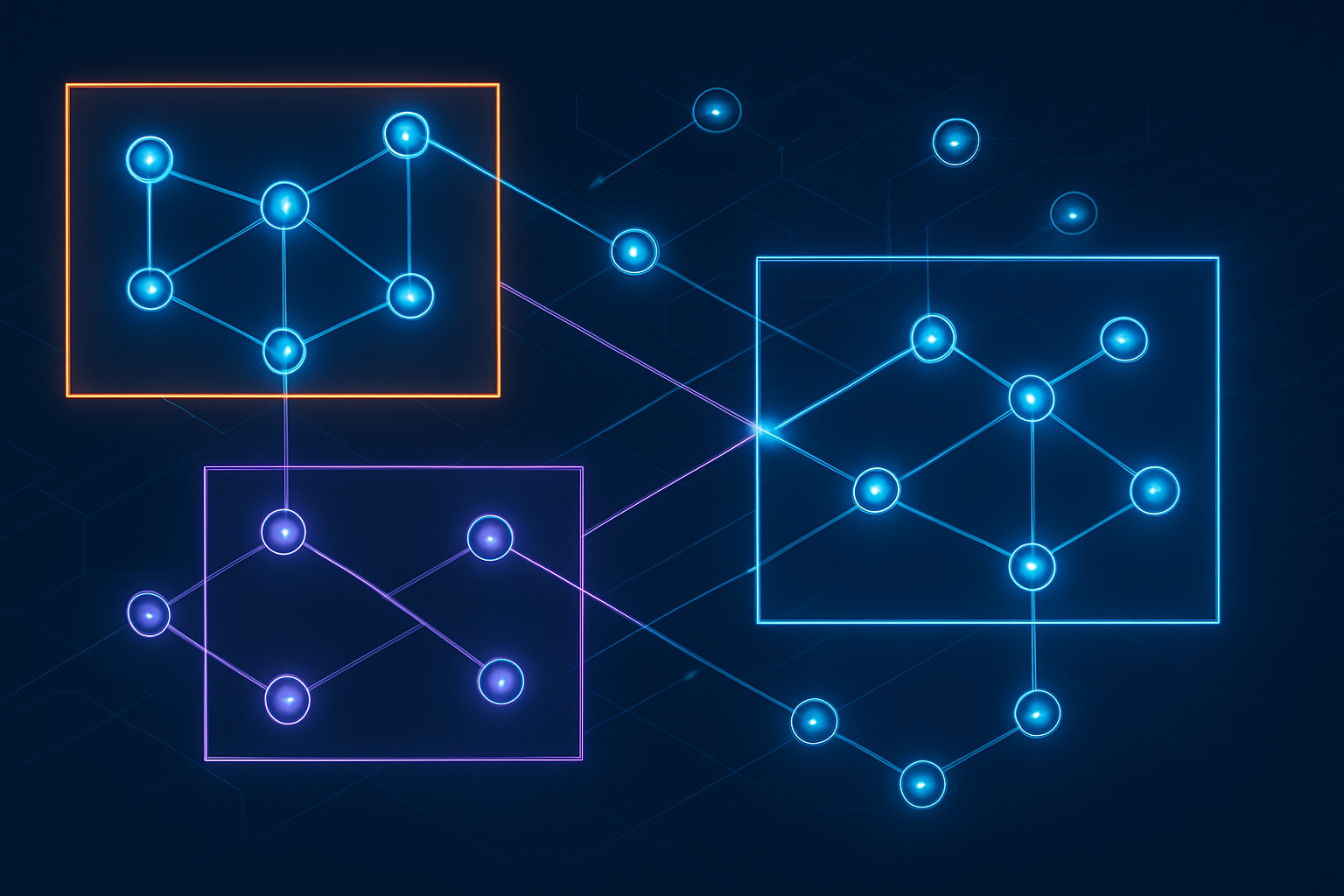

Segmentation has been part of cybersecurity conversations for years, yet the urgency surrounding it has changed. Organizations are no longer debating its value. They are recognizing that delaying segmentation increases exposure, complicates operations, and limits their ability to contain modern threats.
Healthcare systems, government agencies, and other high-stakes environments are facing a surge in internal complexity. They operate diverse ecosystems filled with medical devices, legacy applications, hybrid cloud platforms, unmanaged equipment, and third-party integrations. Each connection point becomes a potential pathway for adversaries. Segmentation directly addresses this risk by creating clear boundaries and controlling how systems communicate.
A recent industry article emphasized how segmentation provides one of the most strategic defenses in healthcare. At Majentai, we see the same pattern across the environments we support. The organizations that adopt segmentation early gain stronger resilience, improved visibility, and faster recovery during incidents. Those that wait often struggle with lateral movement, lack of telemetry, and inconsistent policy application.
Why the Shift is Happening Now
Executives and security leaders are elevating segmentation as a priority for several reasons:
1. Increased reliance on hybrid systems
Applications, identities, and data now operate across on-premise and cloud environments. Traditional perimeter controls are no longer enough. Segmentation enhances internal visibility and reduces the paths attackers can take once they gain access.
2. Growing complexity of internal networks
Many environments contain years of accumulated policies, firewall rules, outdated configurations, and overlapping architectures. Segmentation creates an organized framework that replaces broad, permissive access with intentional, contextual controls.
3. Pressure to achieve Zero Trust maturity
Segmentation is a foundational element of Zero Trust. It strengthens identity-based access, reinforces verification controls, and supports the principle of limiting access to the smallest necessary scope.
From Concept to Scalable Execution
Organizations rarely struggle with understanding why segmentation matters. They struggle with how to operationalize it. Many environments contain hundreds or thousands of workloads, each with its own dependencies and communication patterns. Attempting to categorize, map, and enforce policies at scale without a structured methodology often results in stalled initiatives.
Majentai’s Enforcement Factory was built to solve this. Our team has delivered more than 300 segmentation and Zero Trust engagements across enterprises, healthcare systems, and multi-cloud environments. The model provides a predictable approach that includes discovery, analysis, policy development, enforcement, and Day 2 support. This allows teams to progress from mapping to enforcement with confidence and consistency.
The Benefits of Proper Segmentation
Organizations that implement segmentation correctly experience measurable improvements across their security posture:
- More complete visibility into application and workload behavior
- Reduced attack pathways and containment of lateral movement
- Better alignment between identity, application, network, and cloud controls
- Simplified policy management and reduced operational overhead
- Faster detection, clearer telemetry, and greater accuracy during incidents
Segmentation is not a trend or a specialized technique for only the most mature programs. It is a core capability for any organization that wants to improve its ability to identify threats, contain incidents, and maintain operational resilience.
A Strategic Move Toward Resilience
Many of the most impactful security failures share a common theme: too much trust inside the environment. Segmentation eliminates this problem by creating intentional boundaries, improving signal quality, and supporting stronger decision making during high-pressure incidents.
As cyber threats evolve and internal complexity grows, segmentation becomes more than a control. It becomes a long-term investment in stability and security.
Majentai’s experience across large-scale segmentation initiatives allows us to help organizations move from intention to successful, sustainable enforcement.